
About AWALI

Operator judgment. Engineering depth. At the same table.

AWALI works on the gap between AI ambition and enterprise performance. We bring together leaders who understand operating consequences with technologists who understand data, architecture and implementation—because either discipline alone produces expensive mistakes.

Why AWALI exists

Plenty of AI activity. Too little enterprise leverage.

Companies are running pilots, buying licences and commissioning strategy decks. Very few can point to what any of it changed about growth, margin or risk.

The gap is usually not the model. Models are the most commoditized part of the whole arrangement — every competitor can rent the same ones tomorrow.

The gap is the operating model, the data foundation, the ownership and the execution surrounding it. That is the part nobody sells, and it is the part AWALI works on.

The foundation

Twenty-five years in the data layer.

AWALI did not begin as a prompt-engineering or chatbot company. It began in data unification, enterprise systems and complex integrations — including healthcare and other regulated environments, where the systems are old, the stakes are high, and workflows cannot tolerate “move fast and break things”.

That history is the reason the AI work holds up. Every durable capability stands on the same unglamorous layer.

  1. Data and integration

    Unifying data across systems that were never designed to talk to each other.

  2. Enterprise systems

    Building and running the systems the business actually operates on.

  3. Institutional context

    Encoding how a specific organization works — its entities, rules and exceptions.

  4. AI-enabled operating capability

    Applying models on top of that foundation, governed and measured like any other operating asset.

The operating standard

Four principles, applied to every engagement.

  1. Fewer, more material initiatives

    A short list of moves that change the P&L, chosen deliberately over a long list of use cases that keep everyone busy.

  2. Outcomes defined before technology

    The result and the way it will be measured are agreed before anyone specifies a system. Without that, “done” is a matter of opinion.

  3. Governance designed before deployment

    Approval boundaries, decision rights and audit are part of the architecture, not a policy written after the first incident.

  4. Client-owned capability rather than permanent dependency

    The systems, the operating model and the ability to run both stay with the client. Dependency is a business model; it is not ours.

Leadership

Leadership

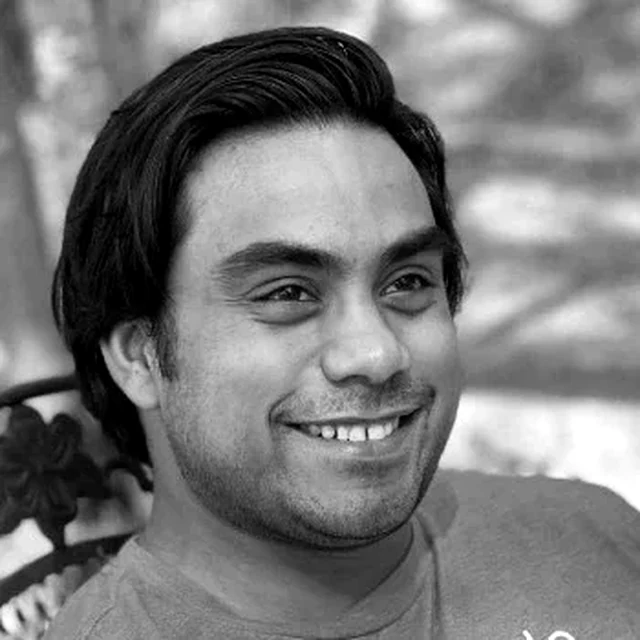
Portrait of Scott Thomas

Scott Thomas

CEO / Partner

Scott’s career has been spent running technology companies and being answerable for how they performed — operational improvement, M&A, integration and turnaround work, rather than advisory distance from the result.

At AWALI he sits at the executive table with the client: pressure-testing the thesis, building the business case, and holding the engagement to the outcome it was scoped against.

Operating experience

  • Led 17 technology companies representing more than $120 million in combined revenue.
  • Experience across operational improvement, M&A, integration and turnaround environments.

AWALI responsibility

  • Executive engagement leadership, business-case development, operating-model alignment and accountability for measurable outcomes.
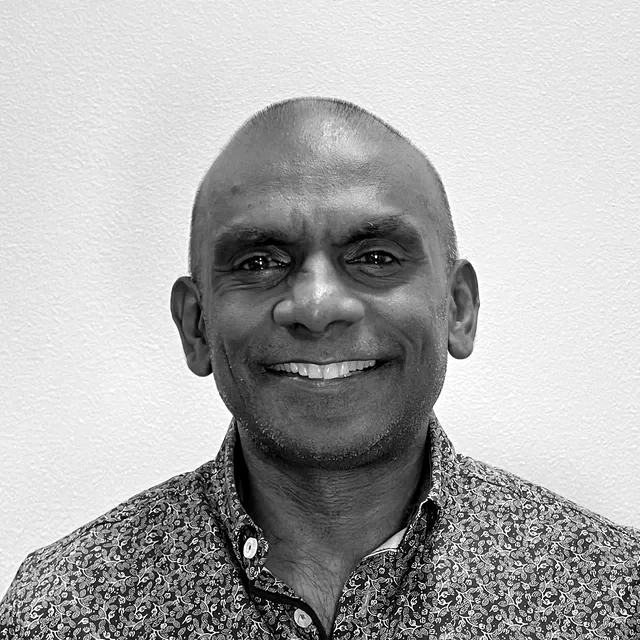
Portrait of Jude Samson

Jude Samson

President / Partner

Jude has spent his career building companies around better business models — co-founding Levelfield.com Inc. in 2000, then Online Agency, and later RFMx.

His work centres on optimizing business processes and designing closed-loop integrated data networks: the connective systems that let an organization see its own operations clearly and act on what it sees. At AWALI that translates into making sure an engagement leaves the client stronger rather than more dependent.

Operating experience

  • Co-founded Levelfield.com Inc. in 2000, Online Agency, and later RFMx.
  • Career built on developing business models and optimizing operating processes.

Delivery responsibility

  • Designs closed-loop integrated data networks connecting operational activity to measurement.

AWALI responsibility

  • Operating-model and process design, adoption, and transfer of capability to the client’s own team.
Portrait of David Samson

David Samson

CTO & Founder / Partner

David founded AWALI and leads its technology. His foundation is eight years of database consulting across financial services, energy, healthcare and agriculture — sectors where the data is messy, regulated and mission-critical — followed by consulting with startups on technology implementation from architecture through delivery.

At AWALI he owns the architecture: the data foundation, the integrations, the security and deployment boundaries, and the engineering that turns an operating-model decision into a system the client actually runs.

Operating experience

  • Eight years of database consulting across financial services, energy, healthcare and agriculture.
  • Consults with startups on technology implementation from architecture through delivery.

Delivery responsibility

  • Technology architecture and implementation on client engagements — data foundation, integration and application engineering.
  • Deployment, security and governance boundaries for each engagement.

AWALI responsibility

  • Technical architecture ownership, deployment and security design, and accountability for what is built and handed over.

How engagements are staffed

Partners lead. The work is staffed to what it needs.

Engagements are led by AWALI partners and staffed around the requirements of the work — including data architecture, integration, application engineering, workflow design, analytics and change execution.

Executive leadership

  • Operating-model design
  • Data architecture and integration
  • AI and application engineering
  • Workflow redesign
  • Security and governance
  • Adoption and capability transfer

Bring a real decision to the table.

The fastest read on AWALI is not this page — it is an hour spent pressure-testing something you are actually deciding.